I’ve got an uncomfortable question for you: Artistically — are you “playing it safe”?
Think about the work you did this past week—in the practice room or composition studio, in rehearsals, in teaching, and in concert. What took courage? When and how did you dare yourself creatively to skate on the edge, to experiment, to risk stretching yourself?
I’m asking because the only way to develop further as an artist is to push yourself out beyond your comfort zone. EVERY DAY.
What prevents artistic growth?
A) Chasing perfection
Many performers grow up chasing perfection (I know I did). We work hard trying to control all the variables — attempting to mimic the ideal performance in our mind’s ear. We do this by micromanaging our every move to avoid making mistakes or deviating from our plan. It’s a kind of lockdown, command and control approach.
Unfortunately, this leads to predictable and “safe,” but ultimately forgettable performances.
Chasing perfection doesn’t help us find our artistic voice or tap into creative flow. Why? Because when we aim for “perfect” we shut down spontaneity, exploration, and discovery.
Of course, we all want to fully develop our technique and perform at our best. But the goal we set for ourselves should be greater than micromanaging the mechanics of delivering the performance.
Perfectionism is a trap.
In the NEA Arts publication, The Art of Failure: the importance of risk and experimentation, writer Rebecca Gross interviewed soprano Janai Brugger who had this to say about perfectionism, risk, and fear. . .
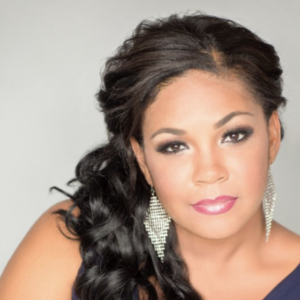 “As artists, we strive to be perfect. I’ve had to really work on that to realize that I’m not perfect, and that all I can do is do the best I can. I find the challenge of particular roles, of particular reaches of my voice, will only make me stronger. If I keep hiding from it, then it’s never going to get better. Then I’m missing out on these amazing roles and characters that I could be playing, or pieces that could be absolutely perfect for me, because I’m allowing fear to dictate what I do. I can’t do that as an artist. I look at it as a great challenge.
I’m finding that with these roles that I’m doing or being asked to do this year, it creates a pride and learning. It’s opened up a whole new world of repertoire.”
More help with getting past perfectionism HERE.
What else prevents artistic growth?
B) Craving external validation
It starts with trying to please our teachers and parents. We go on to seek external validation from competitions, conductors, critics, and selection committees. We look for external judgment to tell us whether or not we’re “good enough.”
I’m not saying we don’t need objective feedback and mentoring. Not at all.
The problem lies in depending on other people’s judgments to measure our worth and bolster our fragile self-esteem. When you don’t believe you are inherently worthy, you can never get enough of the praise you can’t accept.
Craving external validation sets you up for the ongoing heartache of never finding your own voice as an artist. The only solution for this is to learn how to validate yourself.
Only then can you dare to:
Find Your Own Artistic Voice
Like anything else worthwhile in life, finding your true voice is a process.
There’s no formula or quick fix, but here are my three best tips for getting started:
1) Build artistic experimentation into your practice time.
Reserve specific time for this and make it a habit in your practice sessions.
Challenge yourself to take a new phrase from something you’re working on that day and deliberately create three very different interpretations of that phrase. Make each one compelling and convincing.
Experiment with exaggerating dynamics and articulations. Try new sound colors and alternative voicings of lines. Or bring out the harmonic rhythm in ways you hadn’t considered before. Be surprised by what you can imagine and create.
To do this, it may help to imagine three different musicians with three very different personalities so you can expand your expressive palette. For example, try on being a musician who’s got twice the amount of courage you feel you have now.
See how performing as if you’re someone else can change your sense of artistic freedom and choices. Find out what you’re capable of.
2) Book house concerts to use as performance labs.
The truth is, unless we’re touring, most of us never perform any one program enough times to find our own voice and truth in it. So we don’t have a chance to become skilled at being fully present and to risk expressing more.
To help with this, organize a series of local “preview” house concerts in advance of your next big performance. You can do these house concerts in conjunction with potluck dinners with friends.
Performing with audience members within arm’s reach and verbally introducing yourself and your program can help you reconnect with what music is actually for—creating community.
In these salon-style performances, challenge yourself to take more risks. See how close to the edge you can skate as you develop your artistic voice.
3) Dare yourself to do the most important scary thing on your list each day.
Hint: it’s often the thing you’re most afraid to tackle.
The scary thing doesn’t necessarily have to be musical. It may be initiating an important conversation you’ve been avoiding. It may be sending an email, or starting a project, or signing up for a class.
Whatever it is, I know for me that doing the important, scary thing on my list every day (“eating the death cookie“) means that when I go to bed at night, I will feel good. Knowing that I’m on track to becoming the better version of myself—that’s the best thing ever.
The point is, you need to make exercising courage a habit so you can become the person and the musician you intend to be. How else will you ever find your edge, that magical place where the creative flow of artistry happens?
If you’re curious about how coaching can help you reach your artistic goals, check the details HERE.
And if you’re ready to explore getting expert coaching, LET’S TALK.
Here’s to getting your career in forward motion,